

Quick Overview
If you’re planning to submit your music to radio stations in South Africa, your song needs to sound professional from the moment the first second plays.
Many artists spend months writing and recording a song, only to rush through the mixing and mastering process. The result? A track that sounds great in the studio but falls apart on radio, in cars, on phones, or next to professionally released music.
The good news is that creating a radio-ready song is not about expensive equipment or expensive plugins. It’s about making the right decisions throughout the mixing and mastering process.
What Does “Radio-Ready” Mean?

A radio-ready song is a track that sounds professional, balanced, and clear across different listening environments.
It should sound good on:
- Car speakers
- Earphones
- Bluetooth speakers
- Smartphones
- Home sound systems
- Professional studio monitors
Radio-ready does not mean making your song as loud as possible.
In fact, many beginner producers destroy their mixes by chasing loudness too early.
Instead, focus on:
- Vocal clarity
- Balance
- Dynamics
- Clean low end
- Consistent volume
- Overall musicality
A great mix allows the listener to enjoy the song without being distracted by technical problems.
Start With The Arrangement

Before you touch an EQ or compressor, listen to the arrangement.
Many mixing problems are actually arrangement problems.
Ask yourself:
- Are there too many instruments playing at once?
- Does every sound serve a purpose?
- Are the vocals competing with other instruments?
- Are there unnecessary layers creating clutter?
A clean arrangement is easier to mix and often sounds more professional before any processing is applied.
Removing sounds is often more effective than adding plugins.
Focus On The Vocals

For most commercial music, vocals are the most important element.
If listeners cannot clearly hear the vocals, the song immediately sounds less professional.
Pay attention to:
- Vocal volume
- EQ
- Compression
- De-essing
- Reverb
- Delay
The vocals should sit comfortably above the instrumental without sounding detached from the track.
One simple test is to listen at a low volume.
If you can still understand every word clearly, you’re moving in the right direction.
Clean Up The Low End
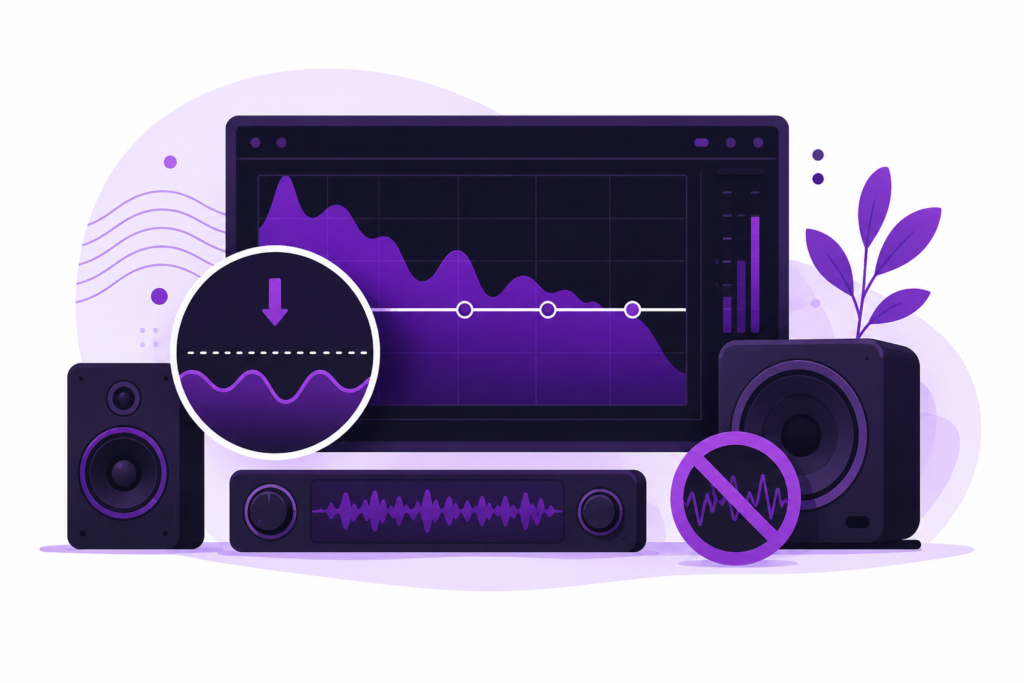
One of the biggest mistakes in home studios is excessive bass.
A song may sound powerful on large speakers but muddy everywhere else.
Make sure:
- Kick and bass work together
- Low frequencies are controlled
- Unnecessary rumble is removed
- Instruments are not fighting for the same space
A clean low end creates clarity throughout the entire mix.
Use Compression Carefully
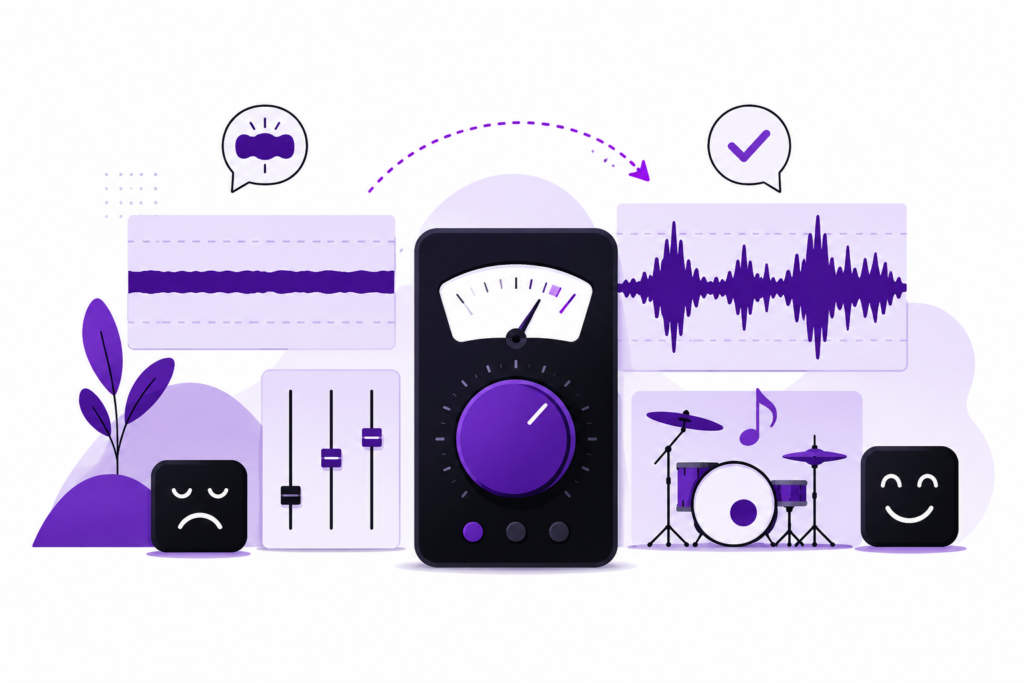
Compression helps control dynamics and create consistency.
However, too much compression can remove energy and excitement from a song.
Signs of over-compression include:
- Flat sounding vocals
- No punch in drums
- Listener fatigue
- Lack of movement
Use compression to control peaks, not to crush the life out of the music.
Leave Headroom For Mastering
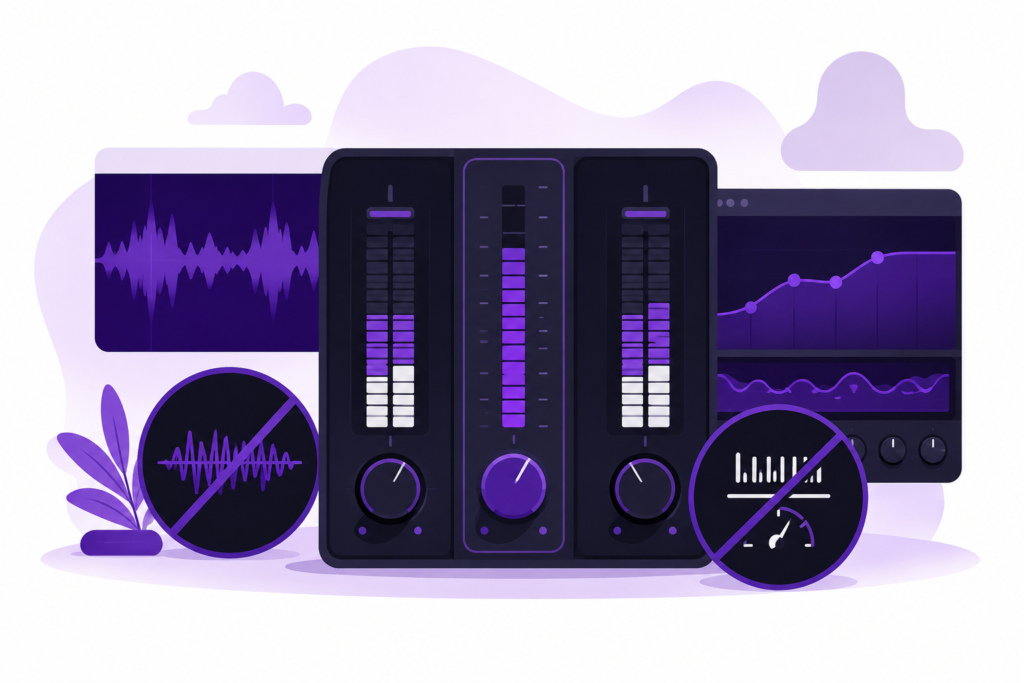
Before exporting your final mix, avoid pushing the master channel too hard.
A good rule is to leave enough headroom for mastering.
Avoid:
- Clipping
- Redlining
- Excessive limiting
Mastering works best when it has room to enhance the song rather than repair damage caused during mixing.
What Does Mastering Actually Do?
Mastering is the final quality control stage.
The goal is not to completely change the mix.
Instead, mastering should:
- Improve overall balance
- Increase consistency
- Enhance clarity
- Improve loudness
- Prepare the track for release
A good master should sound like a polished version of an already good mix.
If the mix is poor, mastering cannot magically fix it.
Compare Your Song To Professional Releases
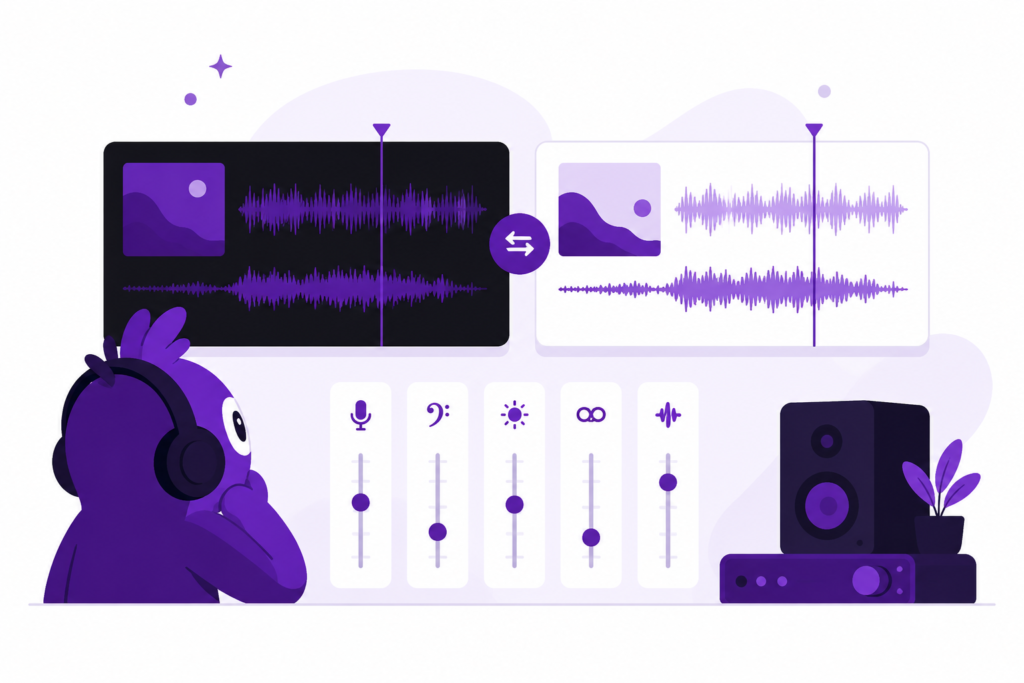
A useful technique is referencing.
Choose a professionally released song in a similar genre and compare it to your own.
Pay attention to:
- Vocal level
- Bass level
- Brightness
- Stereo width
- Overall energy
You are not trying to copy the song.
You are simply using it as a benchmark for quality.
Test Your Song Everywhere

Before submitting your music to radio stations, test it on multiple systems.
Listen on:
- Studio monitors
- Headphones
- Car speakers
- Phone speakers
- Bluetooth speakers
Take notes each time.
If the vocals disappear on small speakers or the bass becomes overwhelming in a car, go back and make adjustments.
The best mixes translate well everywhere.
Common Mistakes That Make Songs Sound Unprofessional
Vocals Too Quiet
Listeners should not struggle to hear the main message of the song.
Too Much Bass
Heavy bass may feel impressive in the studio but often causes problems on other systems.
Harsh High Frequencies
Excessive brightness can make a track tiring to listen to.
Too Many Plugins
More plugins do not automatically create a better mix.
Mastering A Bad Mix
Mastering should enhance a mix, not rescue it.
Radio Submission Checklist

Before sending your song to radio stations, make sure:
- The mix is balanced
- The vocals are clear
- There is no clipping
- The bass is controlled
- The master sounds professional
- The song has been tested on multiple speakers
- Metadata is correct
- The final file has been exported correctly
Final Thoughts
Getting radio play starts long before you submit your music.
It starts with creating a song that sounds professional from the ground up.
A strong arrangement, a balanced mix, and a polished master give your music the best chance of competing alongside commercial releases.
Radio stations receive countless submissions every week. A well-produced song immediately stands out and gives decision-makers confidence in both the music and the artist behind it.
Take your time, trust your ears, and focus on quality. A radio-ready mix won’t guarantee airplay, but it will ensure your music is taken seriously when it reaches the right people.

