Quick Overview
Artificial Intelligence is changing the music industry faster than most artists expected.
Tools can now generate songs, melodies, vocals, lyrics, and even entire productions from a simple text prompt. While this technology creates exciting opportunities, it also raises an important question:
How do you protect your music from being used to train AI systems?
Many artists are worried that their songs could be used to teach AI how to create music that sounds like them without permission, credit, or compensation.
While there is no perfect solution yet, there are practical steps you can take to reduce the risk and protect your creative work.
What Is AI Training?
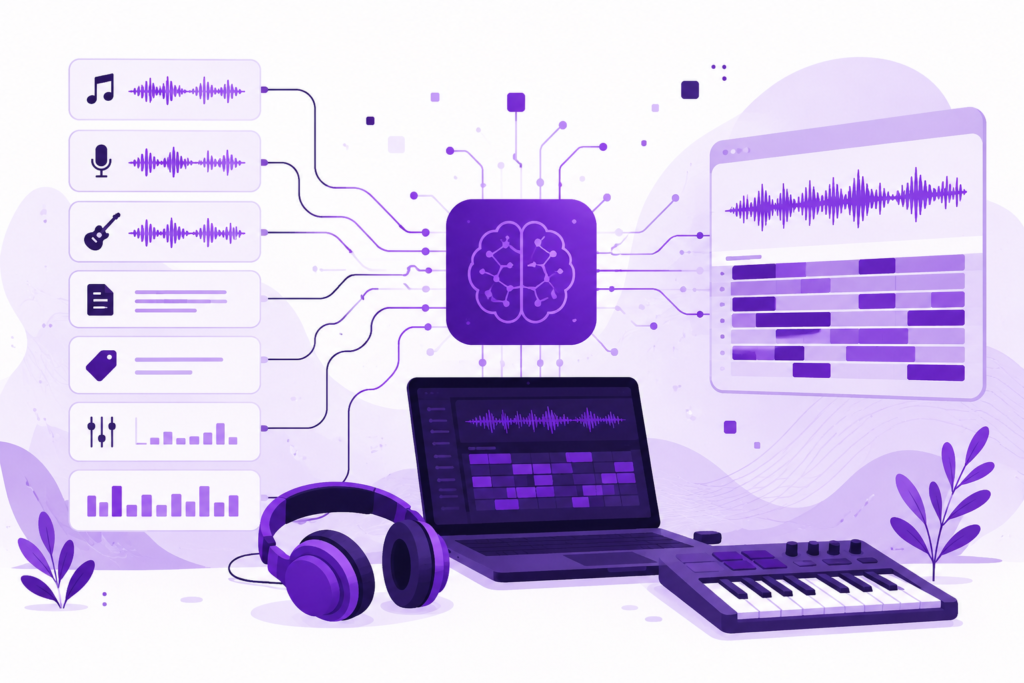
AI systems learn by analyzing large amounts of data.
In music, that data may include:
- Songs
- Vocals
- Instrumentals
- Lyrics
- Metadata
- Production techniques
- Musical styles
The AI looks for patterns and relationships within that information. It then uses what it learns to generate new content.
The concern for many artists is whether their original music could become part of those training datasets without their knowledge.
Can AI Copy Your Music Exactly?
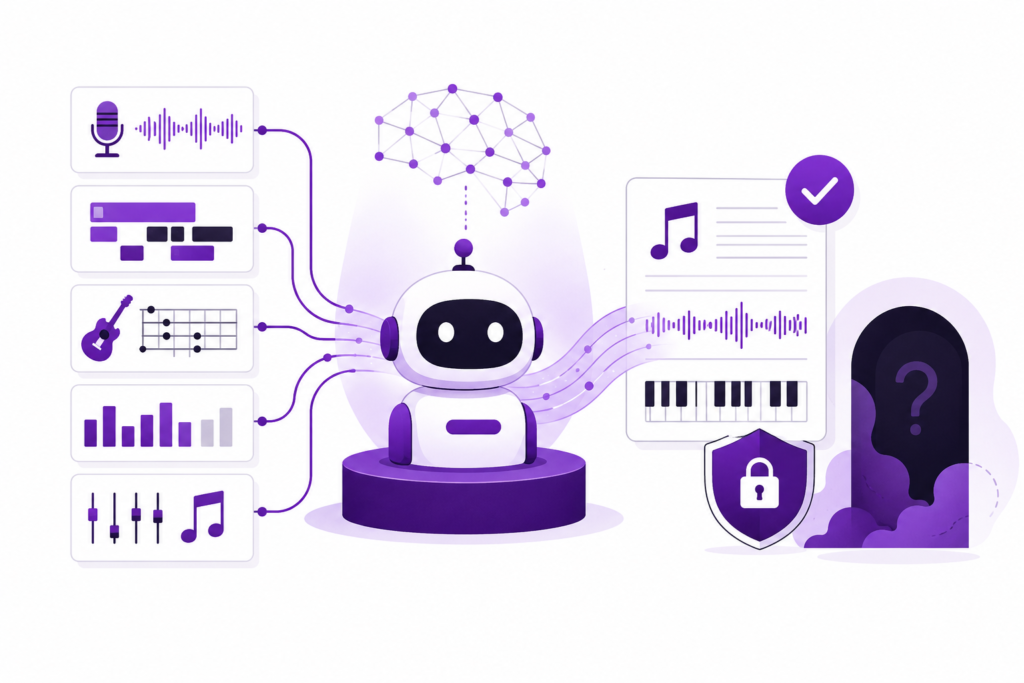
In most cases, AI does not copy songs note-for-note.
Instead, it learns patterns.
For example:
- Vocal styles
- Song structures
- Chord progressions
- Genre characteristics
- Production techniques
This is why some AI-generated songs can feel familiar even when they are technically original.
The concern is not necessarily direct copying.
The concern is whether artists are unknowingly helping train systems that may eventually compete with them.
Read The Terms Before Uploading
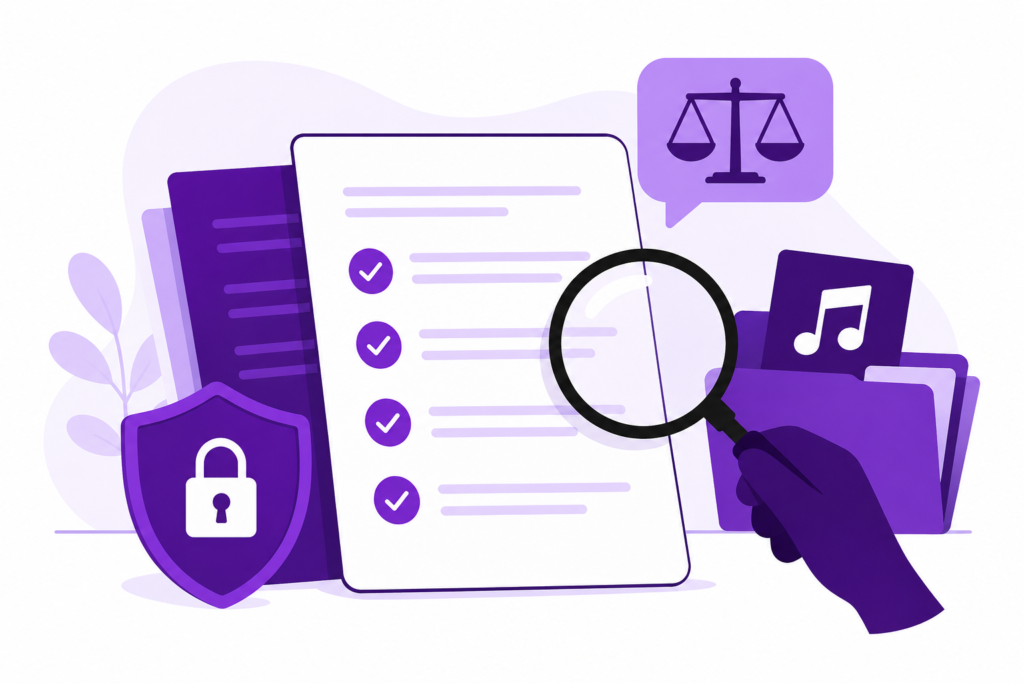
One of the biggest mistakes artists make is accepting terms and conditions without reading them.
Before uploading music to any platform, ask yourself:
- What rights am I granting?
- Can the platform use my content for AI training?
- Can they sublicense my content?
- Can they create derivative works?
Many artists spend years perfecting their sound but give away important rights simply because they never read the agreement.
Always understand what you are agreeing to before uploading your music anywhere.
Be Careful With AI Music Tools
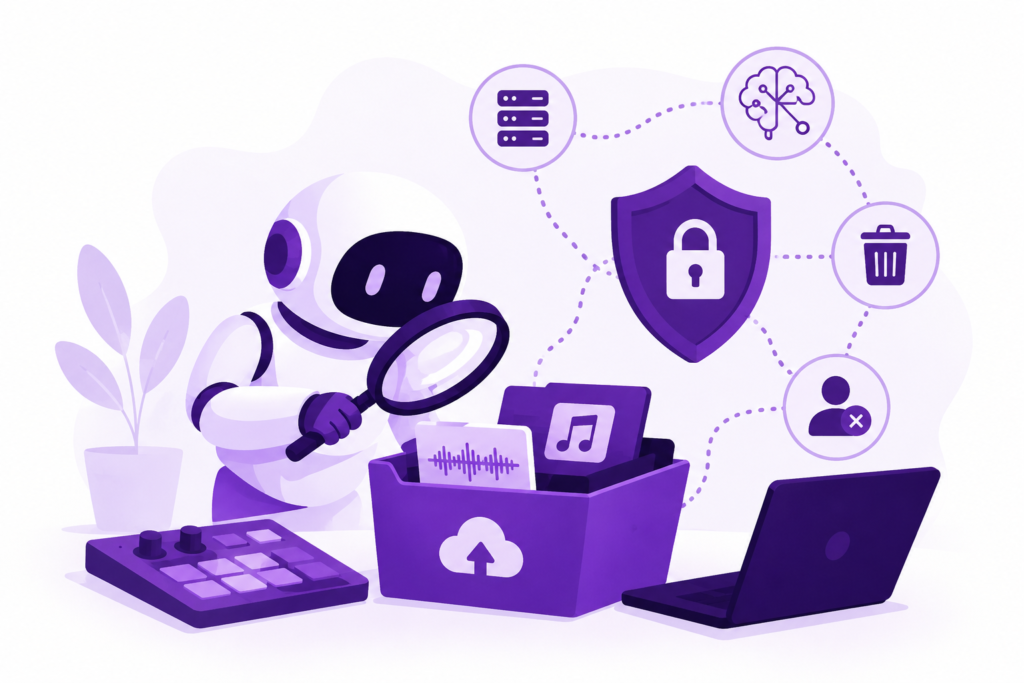
Many artists upload vocals, instrumentals, and unfinished songs into AI tools just to experiment.
Before doing this, ask:
- Where is my data stored?
- Can the company use my uploads to improve their models?
- Can my content be used for future training?
- Can I delete my uploaded files permanently?
If these answers are unclear, proceed with caution.
Your unreleased music is often your most valuable intellectual property.
Register Your Music Properly
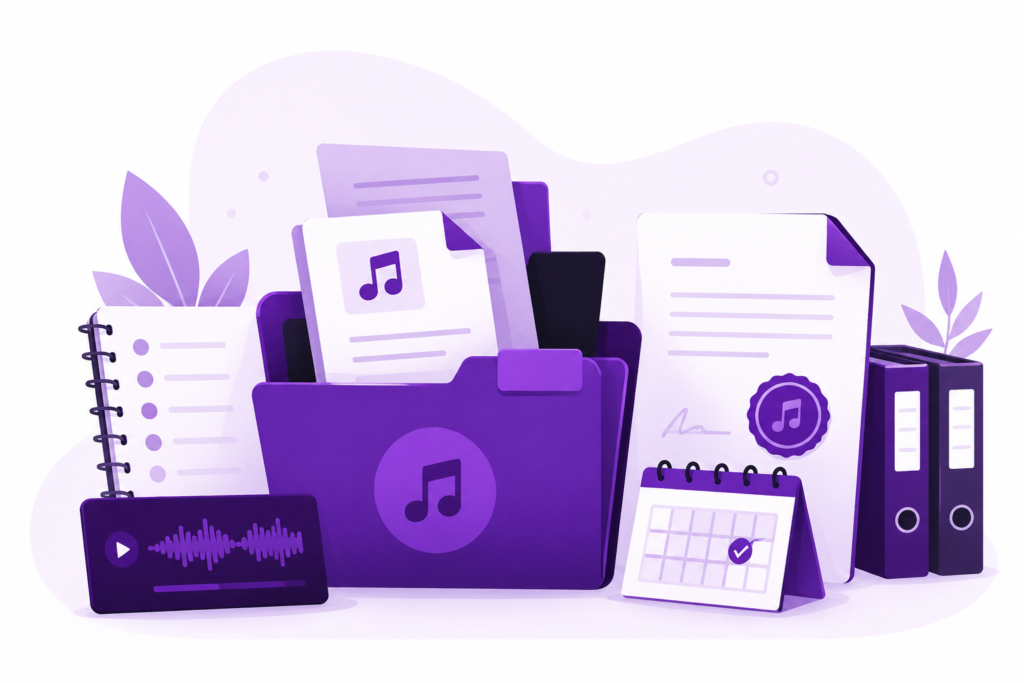
One of the best ways to protect your work is to establish clear ownership.
Keep records of:
- Songwriting sessions
- Project files
- Draft versions
- Release dates
- Copyright registrations
- Split sheets
The more evidence you have proving ownership and creation dates, the easier it becomes to defend your rights if disputes arise in the future.
Build Direct Relationships With Your Audience
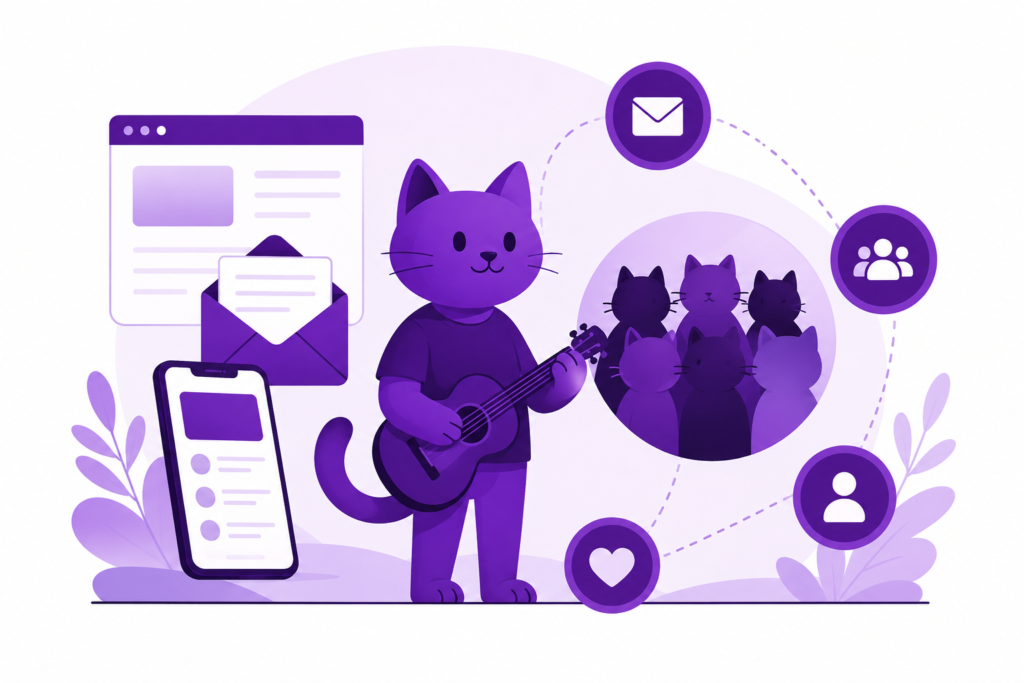
Many artists depend entirely on third-party platforms.
That creates risk.
Platforms can change policies.
Algorithms can change overnight.
Technology evolves quickly.
Artists who build direct relationships with fans are often better positioned to adapt.
Consider building:
- An email list
- A website
- A private community
- Direct customer relationships
The stronger your connection with supporters, the less dependent you become on any single platform.
Focus On What AI Cannot Replace
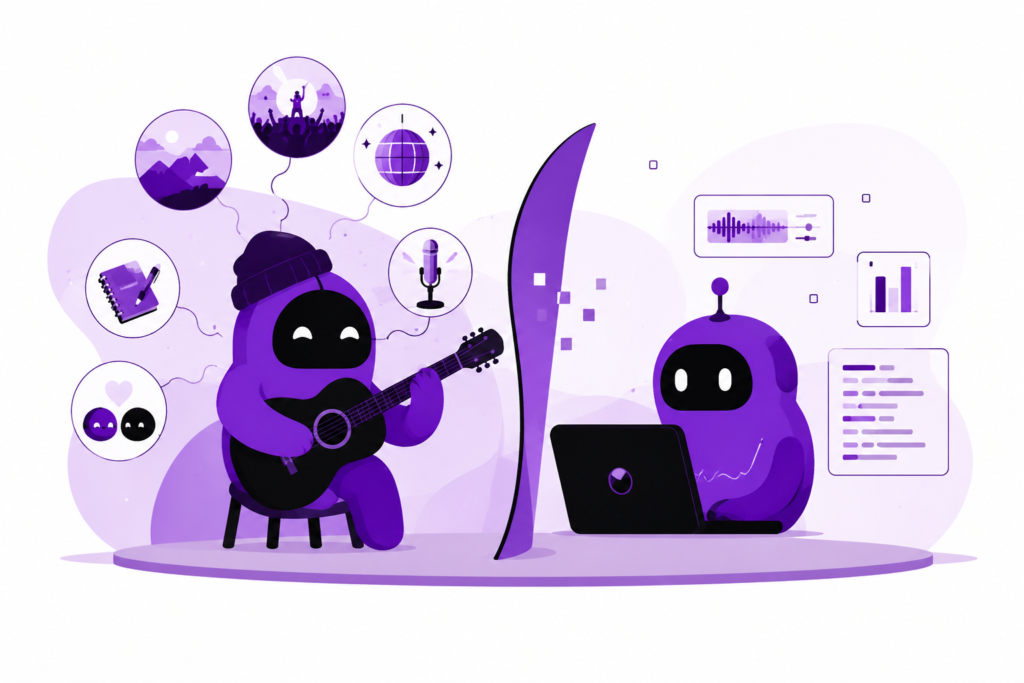
Technology can imitate patterns.
It struggles to replace genuine human experiences.
Your story.
Your perspective.
Your culture.
Your relationships.
Your live performances.
Your personal journey.
These are the things that create meaningful connections with listeners.
The artists who thrive in the future will not necessarily be those who avoid AI completely.
They will be the ones who understand how to use technology without sacrificing what makes them unique.
Should Artists Stop Uploading Music?
No.
Avoiding the internet entirely is not realistic.
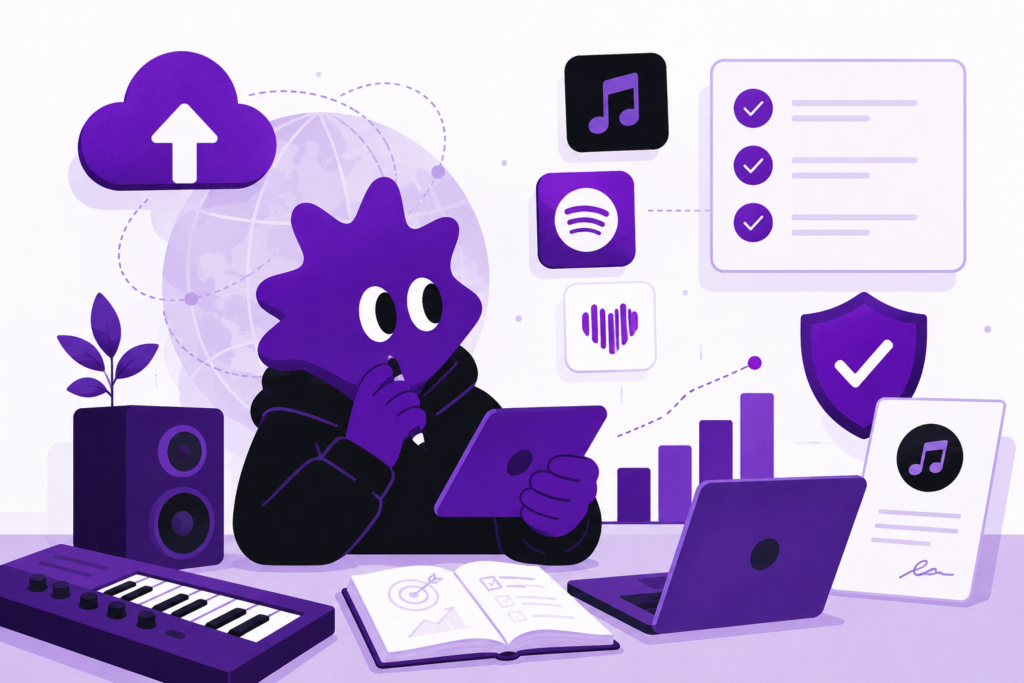
Streaming platforms, social media, and digital distribution remain important tools for growing a music career.
The goal is not to disappear.
The goal is to become informed.
Understand the platforms you use.
Understand the agreements you sign.
Understand how your content may be used.
Then make decisions that align with your long-term goals.
Final Thoughts
Artificial Intelligence is not going away.
The music industry will continue to evolve, and artists will need to adapt.
The best protection is not fear.
It is awareness.
Read the terms.
Protect your ownership.
Keep records.
Build direct relationships with your audience.
Use technology where it helps, but never lose sight of the creativity, culture, and human experiences that make your music valuable in the first place.
AI can learn from patterns.
But it cannot live your story.
And that’s where real artists will always have an advantage.

